Gentle, guided, beginner-friendly.

Arrive & ground
A short introduction to the breath and nervous system.
Breathe
20–25 minutes of guided conscious connected breathing.
Integrate
Guided meditation, quiet rest and optional reflection.
Bring
A mat, a blanket and water. Places limited to 12.
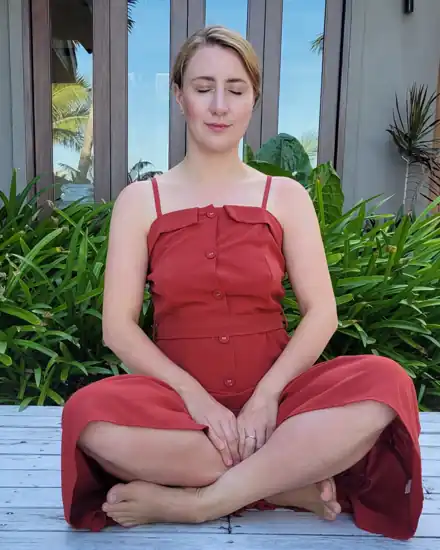
Breathe fully, then rest in the stillness.
Conscious connected breathing is a continuous, circular breath, with no pause between breathing in and breathing out. It can bring up sensation, emotion and release, and we always close with guided meditation and rest so your body can settle.
Research into breathwork is growing. A 2023 review of randomised trials1 found breathwork was linked with lower stress, anxiety and depression, and a 2024 study of conscious connected breathing2 found shifts in brain activity and less negative mood after a single session. Slow breathing, which we return to at the end, is well studied for calming the nervous system3,4.
References and resources
- Fincham, G. W., Strauss, C., Montero-Marin, J., & Cavanagh, K. (2023). Effect of breathwork on stress and mental health: A meta-analysis of randomised-controlled trials. Scientific Reports, 13, 432. doi.org/10.1038/s41598-022-27247-y
- Bahi, C. et al. (2024). Effects of conscious connected breathing on cortical brain activity, mood and state of consciousness in healthy adults. Current Psychology, 43(12), 10578–10589. doi.org/10.1007/s12144-023-05119-6
- Zaccaro, A. et al. (2018). How breath-control can change your life: A systematic review on psycho-physiological correlates of slow breathing. Frontiers in Human Neuroscience, 12, 353. doi.org/10.3389/fnhum.2018.00353
- Balban, M. Y. et al. (2023). Brief structured respiration practices enhance mood and reduce physiological arousal. Cell Reports Medicine. doi.org/10.1016/j.xcrm.2022.100895
Other well-known styles of breathwork
- Wim Hof Method: Kox, M. et al. (2014). Voluntary activation of the sympathetic nervous system and attenuation of the innate immune response in humans. PNAS, 111(20), 7379–7384. PubMed
- Holotropic Breathwork: Rhinewine, J. P., & Williams, O. J. (2007). Holotropic Breathwork: The potential role of a prolonged, voluntarily induced hyperventilation procedure in psychotherapy. Journal of Alternative and Complementary Medicine, 13(7). PubMed
- Dan Brulé (2017). Just Breathe: Mastering Breathwork for Success in Life, Love, Business, and Beyond. Simon & Schuster.
Conscious connected breathing can bring strong physical sensations, like tingling, and big emotions. You are always in control of the pace. Please check with your doctor first if you are pregnant, or have epilepsy or seizures, a heart condition, high blood pressure, glaucoma or a detached retina, recent surgery or injury, or a history of psychosis, bipolar disorder or panic attacks.
You can pause at any time. This workshop is not therapy and is not a crisis service.